

Trigger Warning: Mentions of mental health distress, self-harm, and suicide.
In Crisis or know someone who is?
call or text 988
If you are in mental health distress or have a suicidal crisis, call or text the Suicide and Crisis Lifeline at 988 for free and confidential support. in the US.
Mental health struggles are common during pregnancy or in the year after having a baby, reaching out for support is a brave and necessary step. If you're feeling this way, it’s okay to ask for help. If you are experiencing an emergency, scared you may harm yourself or someone else, go to your nearest emergency room or call 9-1-1
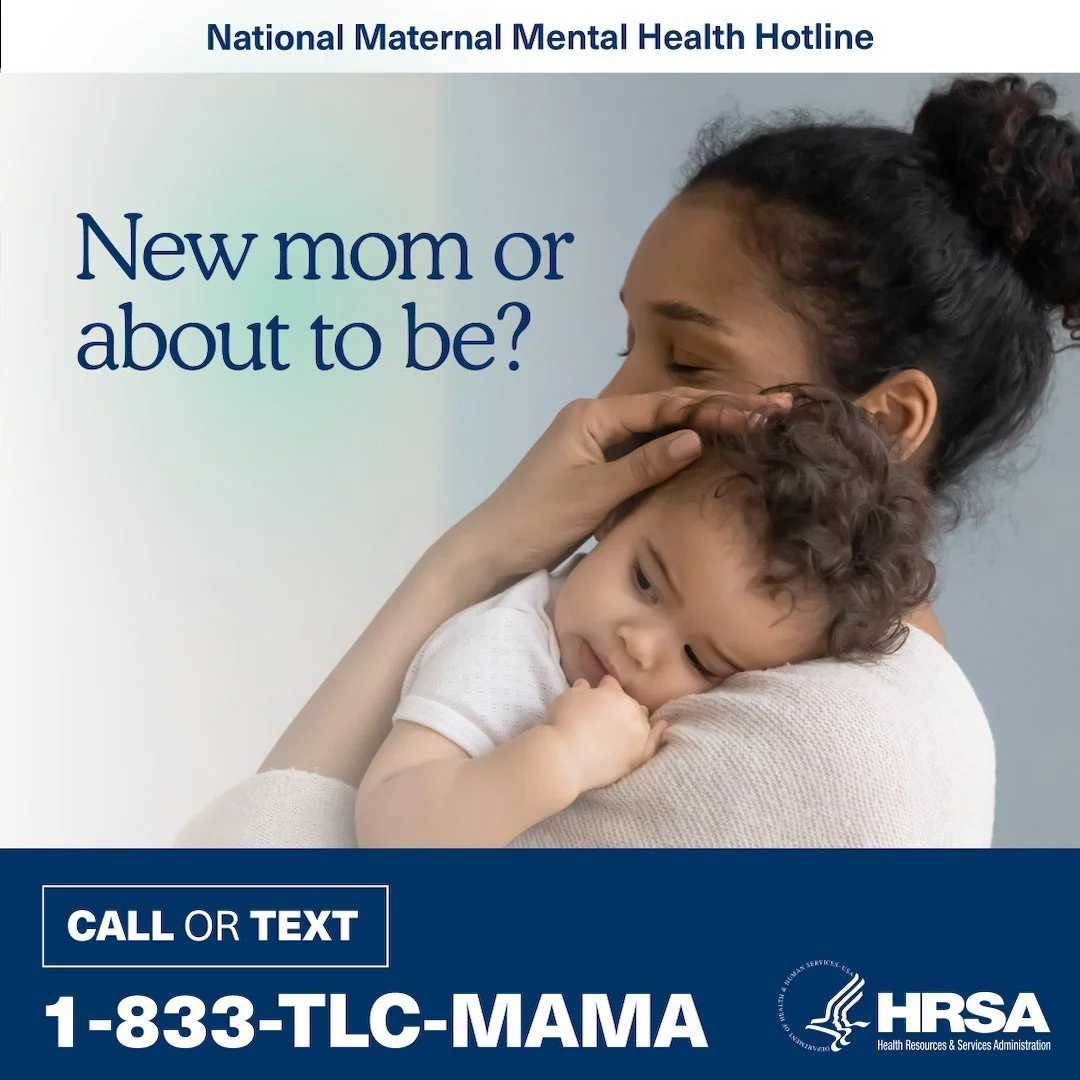
Not in crisis but need real time support and resources?
Call or text the National Maternal Mental Health Hotline at 1-833-TLC-MAMA (1-833-852-6262).
Free, 24/7, confidential hotline staffed by trained counselors available via call, text, or webchat in English and Spanish (translation is also offered in 60 additional languages) offering resources and support for anyone impacted by maternal mental health conditions.
Just need resources and referrals?
Postpartum Support International Call or text 1-800-944-4773(English & Spanish)
Support is free and available from volunteers for mothers, pregnant parents, dads and partners, and caregivers worldwide. S
-
BIPOC Therapist Directory organized by Postpartum Support International (PSI) where users can search for a BIPOC therapist who specializes in maternal mental health.
-
Support group for BIPOC women who are pregnant or postpartum hosted by the Shades of Blue Project.
-
Support group facilitated by trained Postpartum Support International (PSI) volunteers for anyone pregnant or postpartum (up to two years) who identifies as Black or African American to connect, discuss their experiences, and learn helpful tools and resources.
-
Indian Health Service
Agency within the Department of Health and Human Services responsible for providing federal health services to approximately 2.6 million American Indians and Alaska Natives across the United States. Use their Find Health Care Map to search for hospitals, health centers, and behavioral health facilities that serve the Indigenous American population. -
Volunteer program through Postpartum Support International (PSI) where American Indian or Alaska Native individuals who have lived experience with maternal mental health conditions connect parents with online and local resources.
-
Directory to help Latinx individuals find a therapist who shares their identity, culture, and background. In addition, they offer a directory of psychiatrists, immigration evaluation providers, and consultants for therapists.
-
Support group facilitated by trained Postpartum Support International (PSI) volunteers for anyone pregnant or postpartum (up to two years) who identifies as Latina, Latinx, or Latino to connect, discuss their experiences, and learn helpful tools and resources.
-
Directory to help Asian individuals find a therapist who shares their identity, culture, and background.
-
Support group facilitated by trained Postpartum Support International (PSI) volunteers for anyone pregnant or postpartum (up to two years) who identifies as Asian, South Asian, Pacific Islander, or Asian American to connect, discuss their experiences, and learn helpful tools and resources.
-
Postpartum Support International (PSI) Offers a free, weekly and monthly Queer & Trans Parent Support Group open to expectant, adoptive, and new parents up to four years postpartum. [1]
What Every Expecting and New Parent Should Know
Having a baby is a big change, but sometimes moms face very serious mental health problems during pregnancy or in the first year after birth. Postpartum Psychosis (PPP) and maternal suicide are medical emergencies that need help right away to keep both mom and baby safe.
⚠️ Who is at Higher Risk?
You might be at a higher risk if:
You or your family have a history of bipolar disorder, psychosis, or schizophrenia.
You have had PPP or have tried to hurt yourself before.
You have struggled with drug or alcohol use.
🧠 How Mom Might Feel (Inside)
Extreme Fear: Feeling very scared, worried, or having panic attacks.
The "Fog": Feeling numb or like you are in a fog.
Racing Thoughts: Having thoughts that move too fast or feeling way too energetic (“elated”).
Scary Thoughts: Thinking about hurting yourself, your baby, or others.
Sadness: Feeling very guilty, worthless, or overwhelmed with sadness.
Sleep Issues: Not being able to sleep at all, even when the baby is sleeping.
👀 What Others Might See (Outside)
Seeing or Hearing Things: Seeing or hearing things that other people do not.
False Beliefs: Having strange concerns or believing things that aren't true.
Acting Different: Acting very angry, agitated, or strange.
Withdrawing: Pulling away from friends, family, or the baby.
Dangerous Signs: Giving away belongings, looking for ways to end their life, or suddenly acting very calm after a period of distress.
🚨 What to Do Right Away
If you see these signs, do not wait. PPP can get worse very fast.
Call 911 or go to the Emergency Room. Bring this flyer with you.
Do Not Leave the Mom Alone. Someone must stay with her at all times to keep her safe.
Remove Dangers. Secure or remove any weapons or items that could be used for harm.
Talk and Listen. Ask, "Are you feeling okay?" and listen without judging.
Call Professionals. Contact her doctor, OB/GYN, or psychiatrist immediately.
📞 Free Resources for Help
National Suicide & Crisis Lifeline: Call or Text 988
National Maternal Mental Health Hotline: Call or Text 1-833-TLC-MAMA (1-833-852-6262)
Postpartum Support International Helpline: Call 1-800-944-4733